Archive for the ‘music’ Category
34/52: DIY bottleneck slides
This week’s project was a fun one. I’ve been playing lap-slide guitar for a long time. After college, I put it down for a while, and then picked it back up again 10 years ago or so when I was strictly making electronic music, as a way to make some music that was much more immediate. While my heavy Shubb-Pearse bar works great for a real slide guitar, you really need a hollow slide for playing electric guitar, and I didn’t have one anymore, so I decided to make my own glass bottleneck slide this week.
34/52: DIY bottleneck slide from chromedecay on Vimeo.
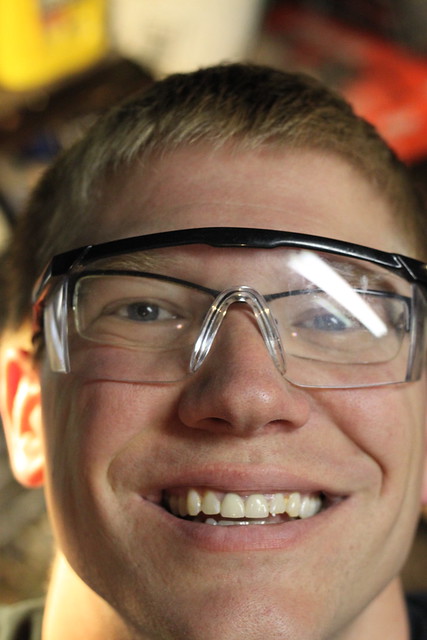
If you decide to try this at home, PUT ON EYE PROTECTION before you do anything else! I wear glasses, and I still put a pair of safety glasses over them so I’d have side shields and shatter protection in front of my eyes.
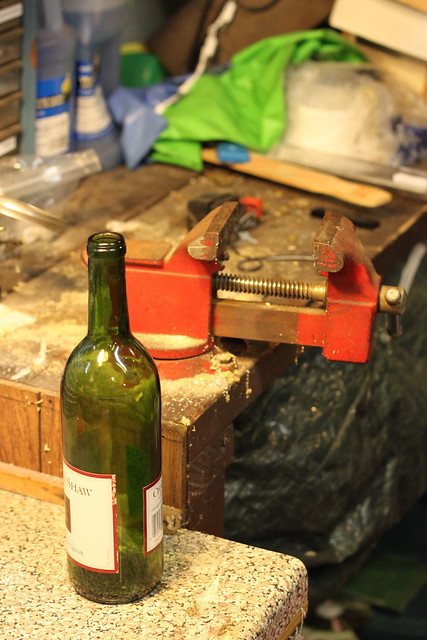
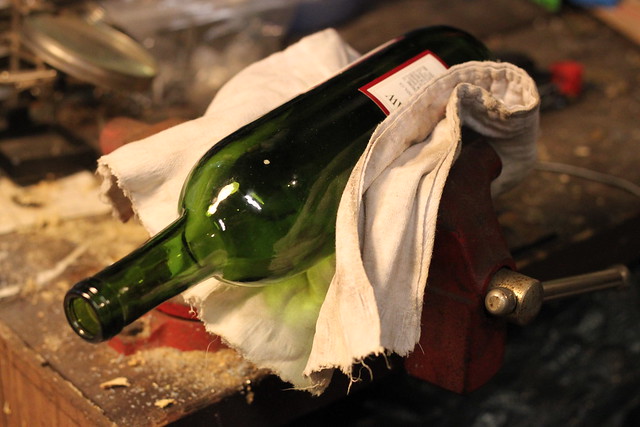
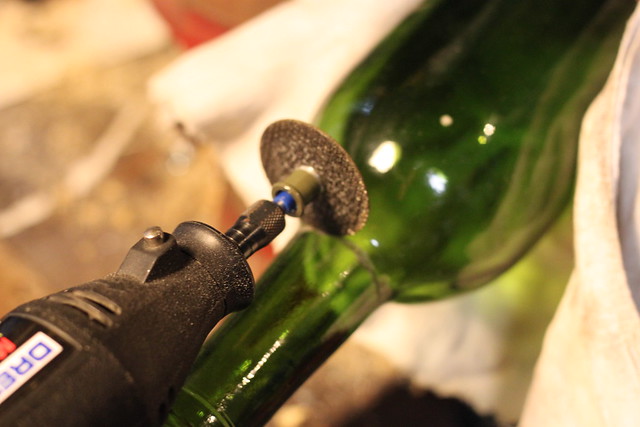
To make my DIY bottleneck slide, I took an old wine bottle, gently clamped it in a vise, and used a Dremel with cutoff wheel to score all around the neck.
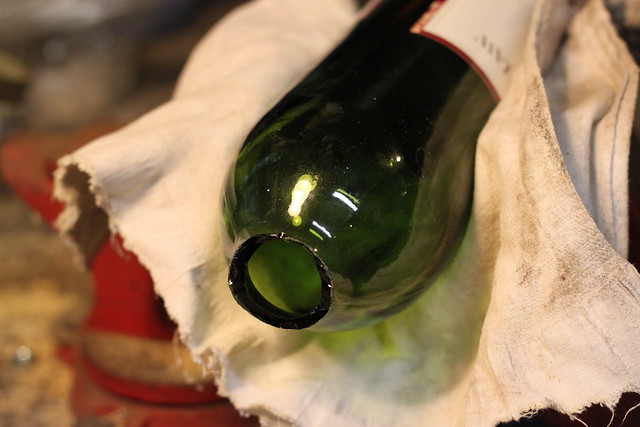
After scoring it all around the neck, I gently tapped the body of the bottle with a hammer, and the neck broke off cleanly.
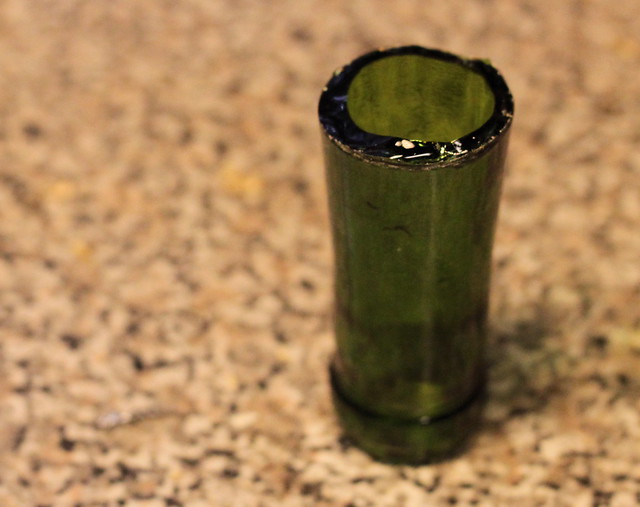
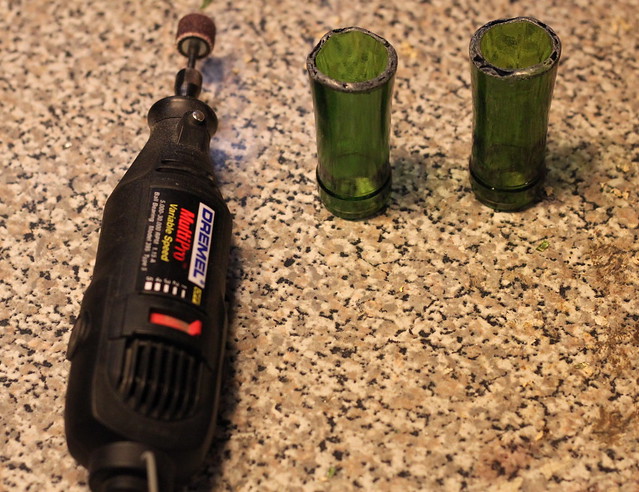
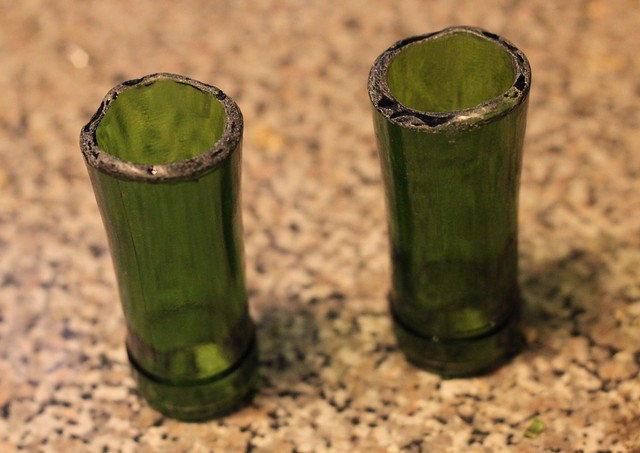
The edges are quite sharp still at this point, so I swapped a grinder/sander attachment onto the Dremel and went to work, smoothing and grinding down the sharp edges so it would be comfortable on my finger.
I made my first one of these on Tuesday night but didn’t take any photos to document the process, so I made another one this afternoon and shot the pictures you see here. I’m planning on giving one of them to another friend who plays electric guitar. Here are the finished products!
32/52: new studio setup, new music
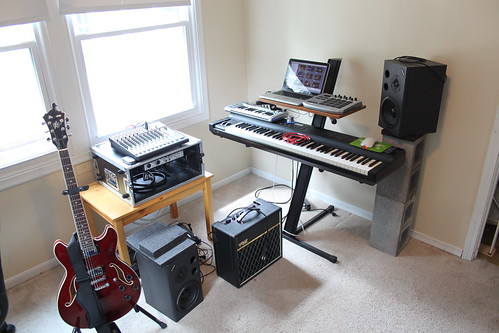
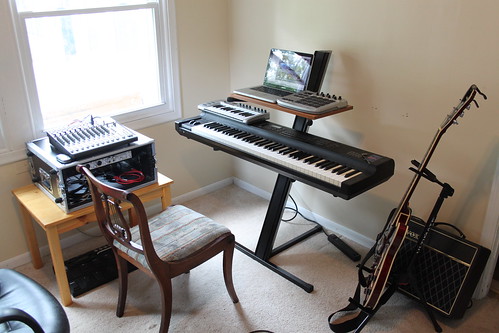
This week, I spent some time moving my music studio into a new space in our house. I know it seems like I just reorganized my studio, but this time it was different – my family has a renter coming to stay with us for a few months, so I’ve temporarily relocated.
Along with moving into the new studio space, I spent some time working on updating, editing, and cleaning up some tracks that have been in progress for quite a while now. Here’s a set of 3 snippets from upcoming new tracks. I have not yet decided on how I’ll be releasing this, but it’s getting closer…
32/52: new music snippets by billvanloo
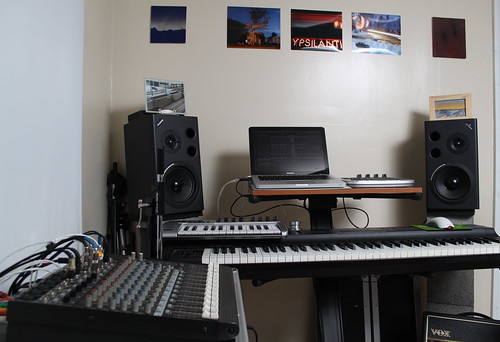
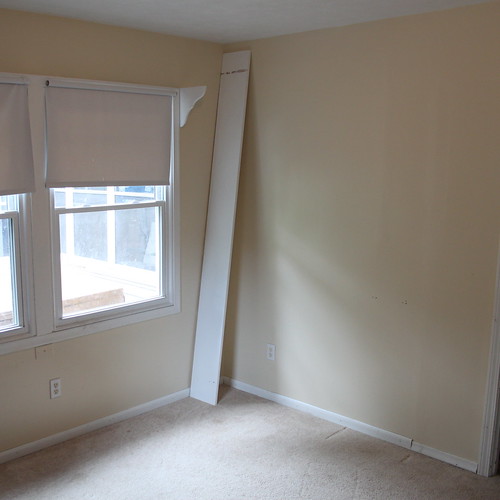
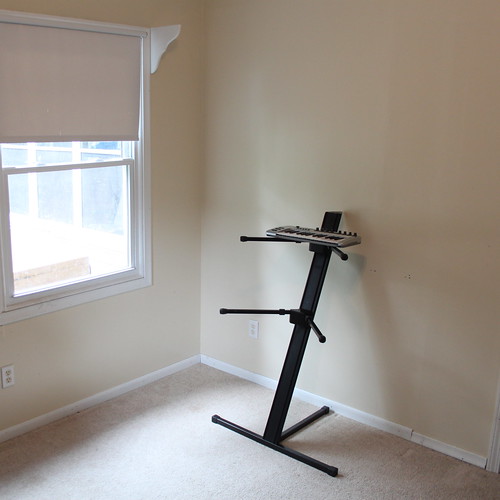
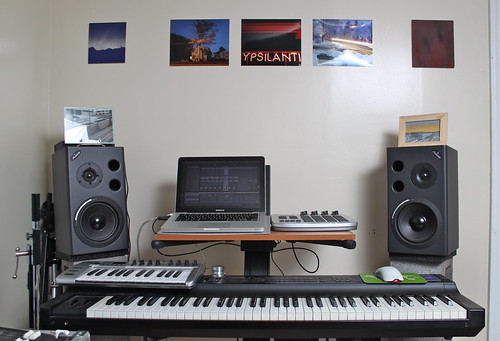
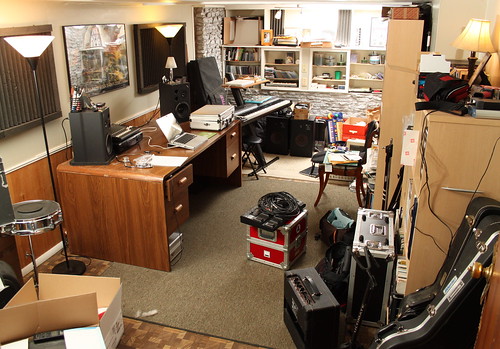
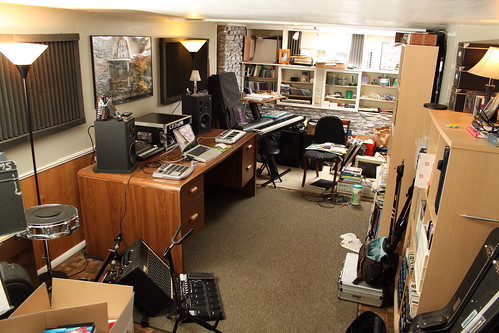
Here are some photos from the process of moving into the new space:
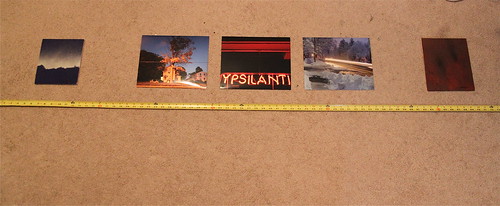
One of the things I wanted to make sure of is that I put some artwork on the walls, so I took 2 pieces by my friend Shawn Johnson, and 3 of my photographs, and quickly put them up. They’re not framed, but at least they’re there.
You can see the full set of photos on Flickr.
26/52: studio cleanup, and some reflections
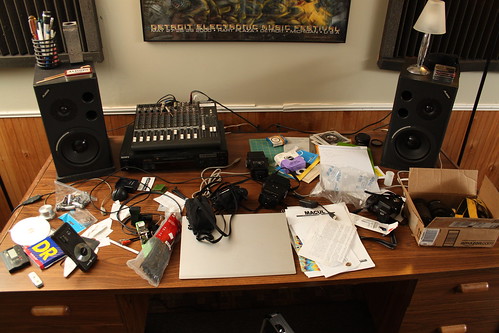
52 things is now at its official halfway point. Not coincidentally, here’s what my studio looked like at the beginning of this week:
After 26 weeks of weekly projects, my creative space has been in pretty active use! For reference, take a look at what it looked like after a similar cleanup in May 2009. This week’s project, then, was to clean it up, organize, and take a few deep breaths in order to be ready for the second half of 2010 and the next sets of projects!
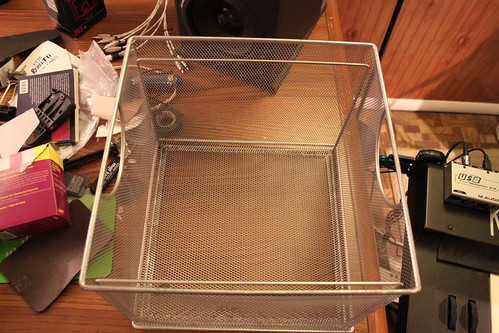
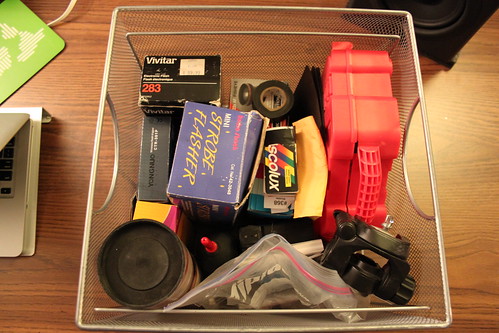
One place that was especially disorganized was my photo supplies. I have a metal crate that I keep small items in – old film cameras, gels for my flashes, spare parts, etc. This crate had gotten pretty out of control:
My philosophy for cleaning is to first empty everything out:
After sorting, throwing away, organizing, and generally cleaning, here’s what the crate looks like now:
Much better! Here’s a photo partway through the process. The studio desk is mostly cleaned off, but there’s still quite a bit of work to do:
Finally, I finished. There’s still a lot to do (old gear to list on eBay or craigslist, things to donate or get rid of, etc) but it’s much better than it was.
You can see the full set of photos on Flickr.
It’s nice to have a clean space to start out the second half of the year in.
This post is set to automatically go live on Friday morning, by which time I will be deep in the woods of Northern Michigan, on a much-anticipated camping expedition. Looking forward to the second half of 2010!
24/52: Church Music Rig
This week’s post is a look inside my music rig for my church. I spent some time this week getting things set up the way I want in order to expand my musical capabilities, so I thought I’d document and share it here for this week’s project.
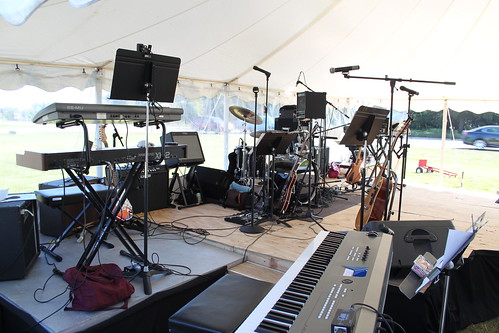
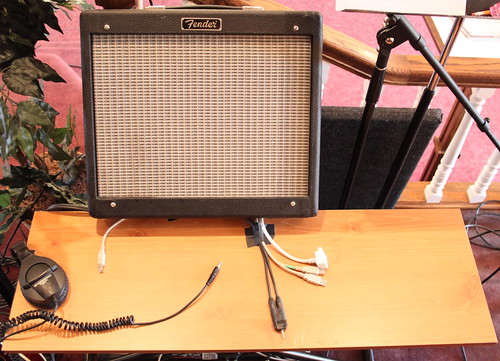
Here’s the overall rig, once it’s assembled:
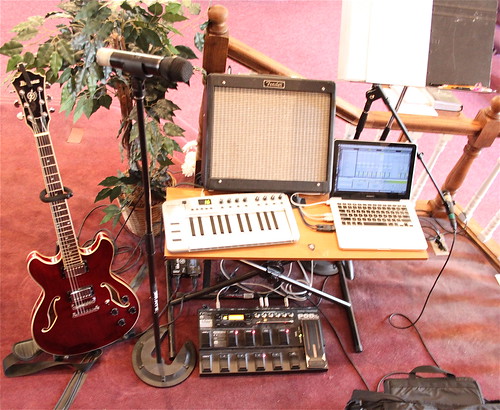
My main role is as a guitarist, the main focus of this rig is playing guitar. You can see my guitar on the left – it’s an Ibanez Artcore A73 semi-hollowbody. It plugs into a Line6 PodXT Live, which in turn runs to a Fender Blues Junior amp. Both the PodXT and the Fender belong to the church, and stay there & are plugged in at all times, so setup is easy – plug in my guitar, turn things on, and I’m ready to play. A mic stand & wireless Shure mic are also set up full-time, since I sing as much as I can (sometimes I’m too busy strictly playing guitar!).
In addition to playing guitar, however, I’m also starting to slowly bring some electronic elements into the mix. As a solo musician, I typically play strictly instrumental electronic music, and finding an appropriate and musically valid way to integrate that part of my music into what I do at church has been a long, slow process. I feel like I’m finally making some progress, however!
On with the rig! As you can see, there’s a shelf under the amp that’s gaff-taped to a keyboard stand, to form a wide, shallow table.
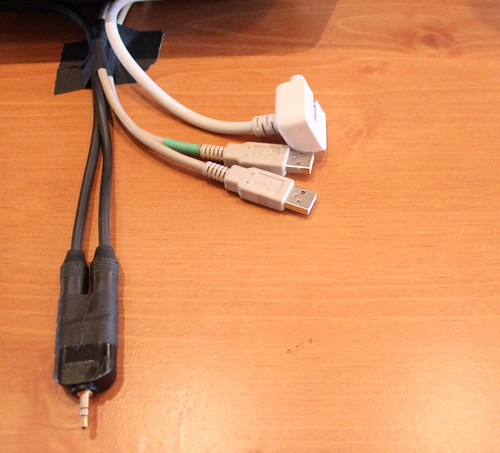
Here’s a closeup. 2 USB cables and an Apple power cord also stay gaff-taped to the shelf, along with a custom audio cable I made up. It’s a 1/8″ stereo miniplug on one end, and stereo 1/4 plugs on the other end. The 1/8″ stereo end plugs into my MacBook Pro’s audio output, and the other plugs into 2 separate DI boxes that run into our sound system. One of the USB cables runs to the left-side of the shelf, and is used to connect an M-Audio KeyRig keyboard (a small, lightweight 25-key USB keyboard controller). The other USB cable runs into the PodXT Live, so it can be used as an audio input into Ableton Live.
Having all this set up permanently means that setup is extremely fast. I pop the KeyRig out of my bag, plug it into its USB cable, set my laptop on the shelf, plug in 2 USB cables & the audio cable, then connect my power supply to the cord. Done!
The bottom of the rig is a little messy. On the top left, you can see two separate DI boxes, which run my laptop’s signal to two separate channels on the mixing board. You can also see the way the PodXT Live fits into the space of the keyboard stand. This is important because it helps my rig take up a smaller amount of space, and keeps everything together nicely. We don’t have a lot of room on the platform (lots of musicians plus choir) so every inch counts!
Now that I have my 1/8″ to stereo 1/4″ cables, I’m able to split the stereo audio output from my laptop into 2 discrete channels. The left channel strictly carries a click track (metronome), while the right channel carries everything else, which might be loops, programmed drums, electric piano sounds, or whatever I choose to play from my laptop.
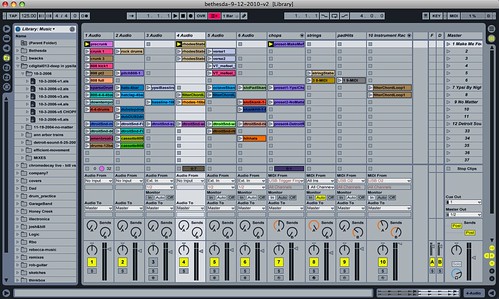
Here’s a look at my screen setup in Ableton Live:
As you can see, the rhodes electric piano channel (which is currently selected) is panned hard-right so it shows up separate from the click track. The advantage of this is that the click track can then be sent to the rest of the band’s monitors (via a send on the mixing board) without going to the main sound system, while anything else from the laptop gets sent separately.
I’m really looking forward to getting a chance to use this rig over the next weeks and months. The ability to drop in programmed elements, live electronics, and use a click track to lock in tempo will be a dynamic new element to our church’s worship music.
18/52: Floridan Rework
Some weeks, my project posts are all about the process – photos, videos, etc. This is not one of those posts. This is just about spending some time with an old track (circa 2001?), reworking it into something new.
Well, there’s just a little process. Here’s a quick video I shot of my studio session the other day, when I added the melodic and chord elements.
18/52: Floridan Rework from chromedecay on Vimeo.
15/52: company7music.com
Something very special happened this week: the solidification of a group of extremely talented musicians that I am fortunate enough to be a part of, called company 7.
This week’s project was getting things organized for company 7’s upcoming releases and Web presence. The group’s new site is:


company 7 is made up of Hans Anderson, Rebecca Anderson, Gabriel Craft, Rebekah Craft, and Bill Van Loo. Our current plans are to finish up an EP for release on chromedecay later this year, and begin planning our live performances. I’m proud to be part of such a talented group of musicians.
A little backstory about the members of company 7. Hans and Rebecca Anderson are a husband-wife duo also known as Double Helix. They have recorded for labels like Transmat Japan, Rush Hour and Delsin, producing house music tinged with jazz, dub, and gospel influences. Gabriel and Rebekah Craft are another husband-wife pair. Gabriel is an extremely talented drummer, having played with groups like Cloud 9 and others. Rebekah is a singer-songwriter, taking her talents to the acoustic guitar and poetic lyrics.
We first played together during the fall of 2004, during a burst of creative output. Family life and other commitments obliged us to put this group on hold, however, until fall of 2009, when we began working on new material again. Photos from one such session are found here:
http://www.flickr.com/photos/chromedecay/sets/72157622286457436/
This week, we made the decision to finish up our current set of material for release as an EP, as well as getting our Web presence up and running. The results are the new company 7 website, as well as some more behind-the-scenes work like putting together chord charts, track info sheets, and so on, to allow us to more easily work on finishing our material.

I’m very excited to bring you our music in the near future.
14/52: chromedecay: field – demo 1 (bicycle & garage sounds)
This week’s project has been in the works for quite some time, but is just now being picked up again. It’s a demo of some new sound/preset work I’ve been thinking about for a long time. I’m calling this first set of material chromedecay: field.
One benefit of being a teacher is that I have my summers off, and I spent some time this past summer with my Minidisc recorder, binaural microphones, and other recording gear, capturing sounds in my house and garage.
One of the sets of sounds I recorded was using my bicycle as a percussion instrument, along with some other random sounds from the garage (like dropping and hitting a plastic pop bottle, and so on). I recorded about 30-45 minutes worth of raw sounds, and then recorded them into the computer as several long, continuous audio files.
At that point (late last summer), that’s where I put the project down temporarily. The work I did this week was to start isolating individual hits and loops in order to turn them into usable sounds. Because I’d recorded the long segments off the MiniDisc into Logic, I started there. Also, I much prefer cutting/editing sound files in Logic compared to Live – Logic’s much more of a traditional audio editor, and I find it works great for that kind of work.
Much selecting, trimming, and saving of individual files was done.
You can see some of the list of files here:
After I had saved out many, many individual hits and loops, I started loading things up into Ableton Live, my preferred composition tool. Live is the ultimate destination for this material, as I intend to eventually make these sets of sounds & loops available (though that’s a project for another week!).
Here’s a couple views of what it looks like when brought into Live:
If you go to the full-size version of those photos, you can see that most of these sounds ended up in Live’s Drum Racks, which is a great tool for this kind of thing.
I then spent some time writing a demo track that would give these sounds a chance to shine.
Here’s the final product:
14/52: chromedecay: field – demo 1 by billvanloo
All the sounds you hear in the demo track were produced from the field recordings I did, with the exception of the bassline.
10/52: new live recording – chromedecay live 2009
I’m pleased to announce the newest chromedecay release, “chromedecay live 2009“. This release features live performances from Bill Van Loo and Joshua Schnable.
Each of these sets was recorded in late 2009. Bill Van Loo’s set was recorded at the Dreamland Theater in Ypsilanti, MI, and Joshua Schnable’s was recorded at FFMUP in Princeton, NY.
This release is available for purchase via iTunes, Amazon and other digital distribution sites. Check the release page for more details.
Joshua’s live set was recorded on October 12, 2009. It is a collection of new work; a tribute to the Berlin dub techno movement of the mid-1990s.
My live set was essentially a live performance of the Ypsilanti by Night record, with lots of live tweaks and additions, along with a rare performance of my track “FM Study”. You can view video from the first song of my live set below:
Bill Van Loo performs “Ypsilanti by Night” live at the Dreamland Theater from chromedecay on Vimeo.
See also: chromedecay behind the scenes: bill van loo live performance rig, part 1 and part 2, where the gear and methods used to perform my part of this recording are discussed in great detail.
9/52: chromedecay 2010 sampler CD
This week’s 52 things project is the 2010 chromedecay sampler CD. It comes in a handmade cardstock sleeve with one of 5 original photos, and contains a selection of new music by chromedecay artists. It’s $3 plus shipping, or free with the purchase of any full-length release (while supplies last). Read more about this project below.
I often start working on a project idea for 52 things a number of weeks before it’s completed and ready to show here on the site. This week’s project is an example of that type of pre-planning.
I’d been thinking about putting together a sampler CD that would contain new music from chromedecay artists for 2010. It’s important to me that chromedecay releases be unique in some way. The obvious trend has been toward digital-only releases, so I felt the unique quality for this CD sampler would be to emphasize the visual and handmade aspects of it.
I got an email from Snapfish at the beginning of the year, advertising 50 prints for 50 cents (plus shipping costs). I started thinking about what I could do with 50 prints, and realized they’d make great cover art for a small CD-R release.

I then started going through my iPhoto library, looking for photos that would make good covers. I settled on using these 5 photos, with 10 copies of each, for a total of 50 prints:


The prints were 4×6 inches, so I uploaded versions that had a 2″ strip of black to one side in order to produce a final image that was 4×4 inches square. After they arrived, I spent 15 minutes or so cutting off the black strip to produce a final 4×4 square image:

After a bit of work, I had all 5 sets of cover photos cut down to size:

I then set the cover photos aside, waiting for the right time to complete the assembly of the covers. This week, I spent some time in Photoshop creating the overall cover layout, including placement for the cover photo.
I also used the time between the first of the year and now to solicit new material from some of the chromedecay artists. I got great material from both Joshua Schnable and Rob Theakston, longtime contributors to the label. The final tracklist ended up being this:
- Cultivating – Rob Theakston
- 1970 Sumeria – Joshua Schnable
- 11-14-2009 – Bill Van Loo
- 5/52 (Rhodes & Reaktor) – Bill Van Loo
- 1970 Sumeria (Bill Van Loo’s JPL remix) – Joshua Schnable
- Vostok Station – Joshua Schnable
- Overextended – Rob Theakston
- The End of It – Bill Van Loo
- Dust Bred – Bill Van Loo
After finishing the layout for the CD sleeve, it was time to print, cut, fold, and glue. Here’s a short video describing that process:
9/52: chromedecay 2010 label sampler CD behind-the-scenes from chromedecay on Vimeo.
You can see more photos of the whole process below:
9/52: 2010 chromedecay sampler photos on Flickr
I’m very pleased to announce that these are now available. As mentioned above, it’s $3 plus shipping, or free with the purchase of any full-length release while supplies last.
8/52: Bill Van Loo “The Ghost of an Idea” now available digitally
I’m pleased to announce that a 4-track EP of my ambient guitar work entitled “The Ghost of an Idea” is now available for purchase digitally. This week’s project was getting a page built for it on the chromedecay site, and organizing all the other stuff associated with publicizing the record’s digital release.
This record came together at the beginning of December 2009, when my longtime friend and musical collaborator Rob Theakson sent me the following text message:
That was on a Monday night, giving me 6 days to produce 21 minutes of music. Now, if this had been anybody but Rob, I would probably have laughed at the idea, and given it no further thought. However, Rob is one of my best friends (as previously mentioned) and he has a way of convincing me that crazy ideas are actually good ones.
I found myself staying late at my church on Tuesday of that week and recording a bunch of guitar improvisations after band practice ended. I had a very loose idea of what it should sound like, along with a rough conceptural framework to hang it on.
The title of the record, “The Ghost of an Idea”, is taken from the prologue of Charles Dickens’ classic “A Christmas Carol”; the four track titles are abbreviated forms of chapter titles. As I started thinking about the story and how it’s structured, I was inspired by the complex and emotional memories in it, as well as the idea of the Holy Ghost inhabiting and inspiring artistic works of diverse forms.
That gave me just enough to go on. I took a guitar piece I’d previously recorded for Rob but which had never been released, and that became “The First”. The other 3 pieces were based on these guitar improvisations, which were edited and layered in Logic Audio (much like “6 strings for a winter’s day“, my earlier ambient guitar work).
The cover image is a photo of a house in Ypsilanti that I took last summer:

Once I delivered the final mixes to Rob, he quickly pressed up 50 copies of the record as a 3″ CD, which is one format that his boutique label releases music on. A number of copies made their way to me, and I sold the majority to recipients of my email list in the following week or so. I have a few left to sell at shows, but that’s it, so I realized it made sense to also offer this digitally.
After looking into my options, I found that RouteNote seemed to make the most sense for this release. Its major difference from other digital distribution companies like CDBaby (who I use for most of my digital distribution, especially for releases that are also available as physical CDs) is that RouteNote doesn’t charge a fee upfront, but instead takes a slightly larger percentage of each MP3 sold. For a release with such a small number of tracks, it would take quite a bit of sales to recoup even the $55 setup fee that CDBaby charges, so it seemed to make sense.
I’m very please that this is now available; RouteNote has distributed it to the Amazon MP3 Store and eMusic. It will be available via iTunes very soon.
You can also check out the growing selection of other releases on chromedecay, both by me and others.